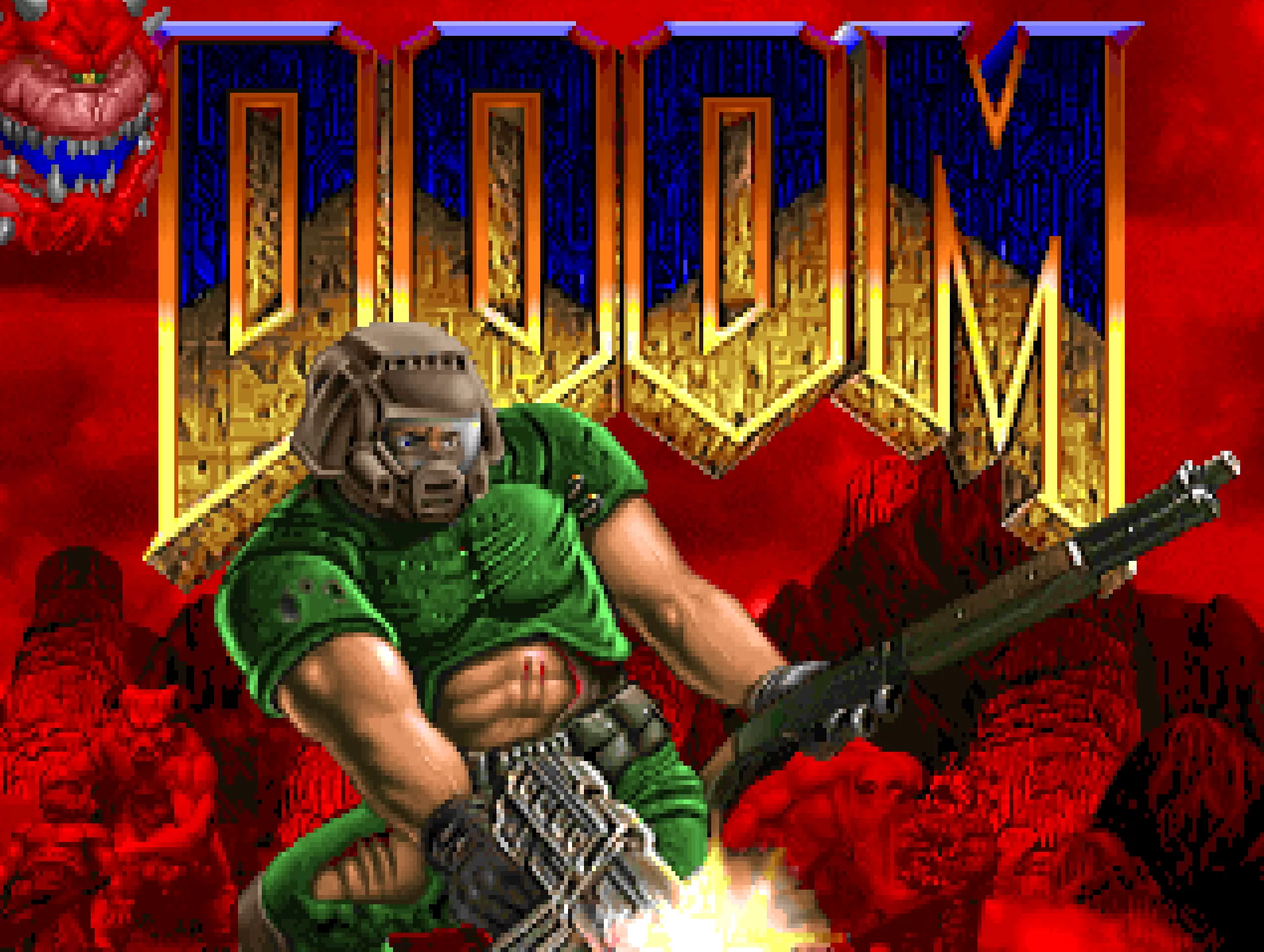
Original DOOM was released for MS-DOS in 1993 to great reviews and, according to some, established a First-person shooter genre as we know it. Even if you have not played this game yourself, there is a high chance that you have heard its soundtrack and know a bunch about the game in general.
But I’m not here to talk about how great the gameplay was or how beautiful 3D-like graphics combined of 2D textures were. There is an aspect that I believe was really overlooked by many. “Good, but can it run DOOM?” is a common internet joke that has been going on for over 30 years by now.
This article on how a long running internet joke did present us (as a Gaming Community) with a unique way of a game preservation. So, buckle up. It is about to get a bit technical.
Game Engine and Data Files
Most games (as in what you actually download and use to play the game) are built in the similar way. There is a Game Engine. Think of it as program, that takes Data from a file, loads it into your RAM and “makes it all work”. It contains logic of the game itself and how it will play, usually adjusted heavily for game’s genre. The engine by itself as important as it is, doesn’t make for a complete game. It still needs Data to read. That’s where Data Files come in. Data Files contain your textures, music, some instructions, and some other stuff. You need both parts to actually run the game and make it playable. If you have only one… well, tough luck. Also, keep in mind that this explanation is a very short version of how all of it works as this concept has many variations between games and also, I didn’t want to go too technical here as it is not the main part or the point of this article.
So, where does DOOM come in? On December 23, 1997, John Carmack released the source code of Doom for Linux under a proprietary Doom Source License. However, License was a bit restrictive. It was mostly for an educational purpose. You can read it yourself here if you want more details. Luckily for us, nearly 2 years later it was released again but now under GNU General Public License Version 2. That was a game changer, quite literally. This license allows anyone to make any modifications to the source material and distributing it freely for any purpose, as long as the source code of the end product stays open too. It became free as in freedom. Since then we have seen a lot of ports (modified code that allows it to run on many other devices) but more importantly, this kept the game playable long after MS-DOS stopped being a common operating systems.
However, all this code was just an engine. To actually play the DOOM you still need to get Data Files. In this case, they are are called “WAD” (Where’s All the Data?). As an addition, many mods for the game need this original WADs to play them as well.
But wait there is more, enter Freedoom
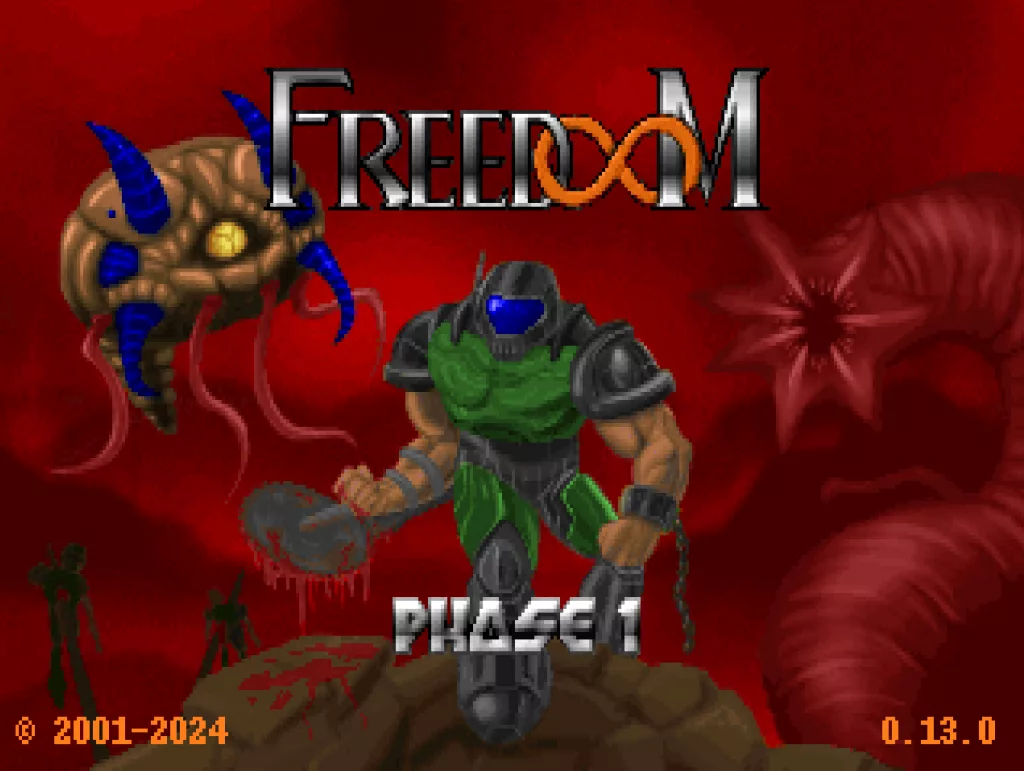
As it was stated above. You would still need those Data Files to play mods. That’s where Freedoom comes in. It is a set of game data that allows you to effectively play most of the mods without a need for an original WAD with an added benefit of a Freedoom also containing a set of levels you can play through and enjoy.
To Sum Everything Up
At this point we have a Free and Open-Source Game Engine and Data Files for DOOM. This allows anyone to access this game and mods made for it as well as ensures that the game will stay with us for as long as there is someone willing to make some tweaks to the code. If you are curious to see the list of DOOM source ports available today, you can do that here.
While DOOM wasn’t the first Open-Source game, it was arguably the first major commercial blockbuster to have its engine available under Public License. This release proved that practice of releasing the game engine under an Open-Source License (GNU General Public License is one of many options) can greatly improve longevity of the game and won’t do any harm as player would still need to purchase original Data Files in order to play. Obviously, this practice is far from the mainstream, even though it was more popular in the early 2000s.
Now, it’s more of a my personal opinion and maybe a bit of a stretch. I believe this practice has partially inspired some projects that are a bit different. In cases like DOOM, the company itself has released the Game Engine but there are cases, like The Elder Scrolls III: Morrowind, where the source code was never released. People got together to reverse engineer the whole thing by themselves. They managed to figure out how the engine works without seeing its code and create another version of it from the ground up. Now, we have OpenMW and can play The Elder Scrolls III on modern software and hardware, with a proper widescreen support, a better mod support and so on.
The best part of it all is that while I’ve mentioned only two projects here, there are way more community maintained projects like these. As far as my favourites go (except for those already mentioned here): Warzone 2100, DevilutionX (Diablo I), OpenJK (Jedi Academy), Arx Libertatis (Arx Fatalis), VCMI (Heroes of Might & Magic III). And yes, there are more of them… I guess some games simply refuse to die and I believe it’s simply amazing.

Written By: tiskmaaato
Favourite Film: The Lord of the Rings Trilogy
Favourite Game: Warcraft III (The Old One)
About: A being that is somehow still alive, presumably very real and NOT a figment of your imagination with a keen interest in comparatively obscure parts of gaming, software and TTRPGS.
Donate: https://ko-fi.com/tiskmaaato
Discover more from Pending Plays
Subscribe to get the latest posts sent to your email.